
Irion County Sex Offender Checks
The Texas Public Sex Offender Registry is the first official channel for an Irion County search. Texas DPS maintains the central database, while the registering local authority verifies and reports local data. The registry can be filtered by county, Mertzon, ZIP code, street, or a person’s name. That range matters in a county with one incorporated city and a large rural area. A county filter can catch records beyond Mertzon, while an address search helps with a known block or nearby point.
Use the Irion County Sheriff for questions about registration outside an incorporated city and suspected noncompliance in the county. Chapter 62 directs city residents to the city’s local law-enforcement authority and non-city residents to the county authority. No separate public Irion registry or alert app was documented. The state registry, the sheriff, and DPS form the verified chain.
Note: A name-only result needs identity checks because aliases, similar names, and past addresses can point to the wrong person.
Texas Public Sex Offender Registry Searches
Start with the official DPS interface and keep the search broad enough to account for spelling and location changes. The registry search screen shown by Texas DPS provides the county and location controls used for Irion County. The image below shows the official public entry point, not a privately compiled people-search product.
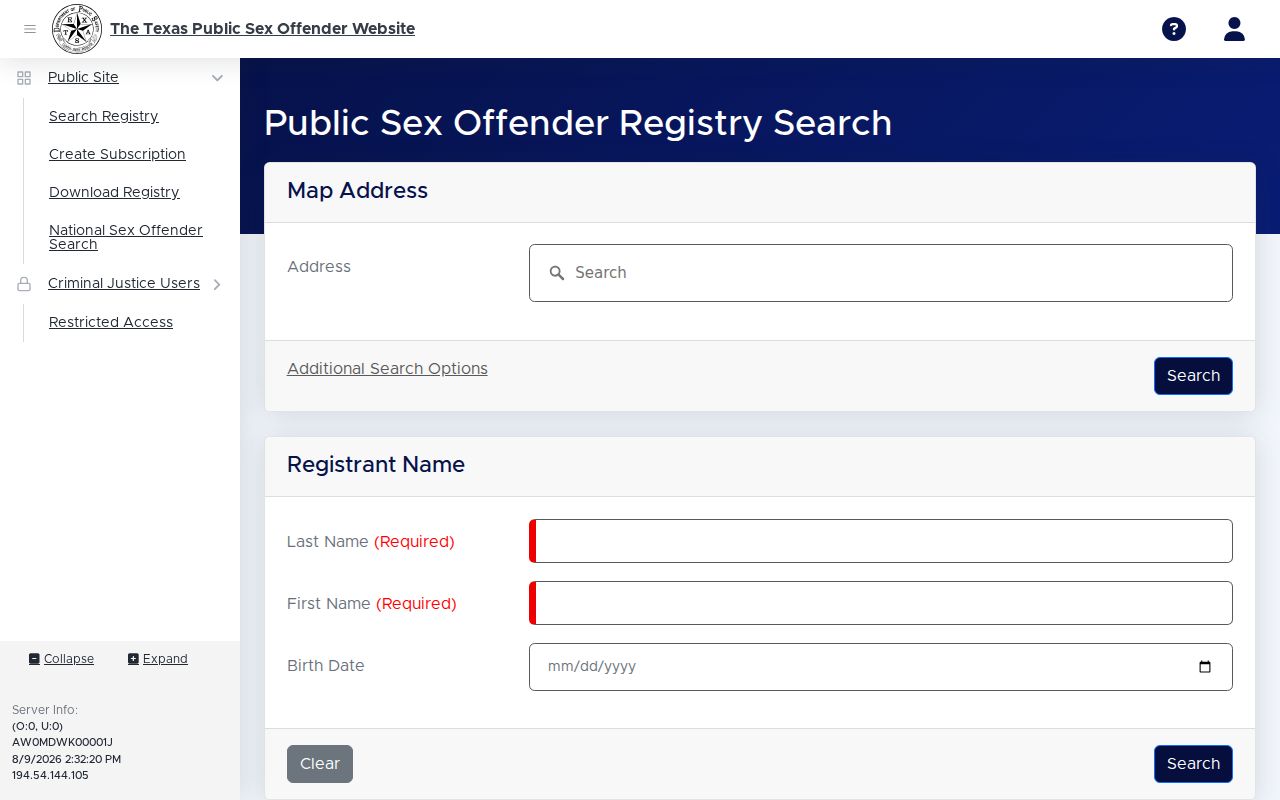
That official screen is the right place to begin because DPS controls the statewide record and its public-field rules.
- Open the Texas DPS registry and review its conditions of use.
- Choose a name search or use City, County, ZIP Code, address, or Map Search. Select Irion for a countywide result.
- Compare the result list with known identity and place facts. Do not assume a shared name proves a match.
- Open the profile and read its reporting agency, status, offense, address, and registration details together.
| Field Label | Type | Required | Notes |
|---|---|---|---|
| Last Name | Text | Route-dependent | Used for a name search; partial behavior follows the live interface. |
| First and Middle Name | Text | No | Narrows likely matches and helps separate aliases. |
| Address or Street | Text | Address route | Supports a geographic or map-based search. |
| City | Text or select | Route-dependent | Use Mertzon when the city is known. |
| County | Select | No | Select Irion for the full county area. |
| ZIP Code | Text | No | Uses a five-digit geographic filter. |
| Map Search | Map control | No | Shows results by geographic display. |
Mertzon and Irion Registry Filters
A Mertzon address search and an Irion County filter answer different questions. The city search is useful when the location is known to fall within Mertzon. The county selection reaches beyond that one incorporated city to rural addresses and location descriptions. Search both when a boundary, postal label, or recent move makes the place uncertain. ZIP codes also do not always match city limits, so they should narrow a query rather than define the registering authority.
If a profile address seems stale, note the reporting agency and the last status shown. Then contact that registering authority or DPS with the exact public record at issue. Do not visit the address to investigate. Use 911 only for an emergency. A suspected missed update or unreported move belongs with law enforcement, not a neighborhood confrontation.
Registry Profiles: What They Show
An Irion County public profile is designed for recognition and lawful awareness. It can combine identity details, a registered place, an offense summary, and the agency responsible for the record. It may also display a vehicle or visible identifying marks when the interface makes them public. The profile does not publish every fact held by DPS or the registering authority.
| Name and Aliases | Public name forms and known aliases used to distinguish the record. |
|---|---|
| Photo and Description | Photo, age or birth-date display, sex, race, height, weight, hair, and eye color where published. |
| Registered Location | Street address or another lawful location description shown by the registry. |
| Offense Details | Offense, statute, conviction or adjudication date, and lawful victim category or age information. |
| Risk and Status | Assigned Texas risk level, registration type, current status, and reporting agency. |
| Other Identifiers | Vehicle information and scars, marks, or tattoos when the public interface supplies them. |
Article 62.005 excludes Social Security and driver-license numbers, phone numbers, online identifiers, employer details, victim-identifying data, and other confidential fields. A juvenile court may also make registration nonpublic. A blank field does not prove the authority never collected it.
Irion County DPS and NSOPW Searches
DPS is the primary source for Texas registration detail. The National Sex Offender Public Website adds a cross-jurisdiction layer when a person may have moved across state or tribal lines. Its search page can help widen an Irion County inquiry, but a Texas result should still be read in the Texas DPS system and checked with the listed local authority.
The official national search interface is shown below. It gathers public registry access across participating jurisdictions rather than replacing the agency that maintains the source record.
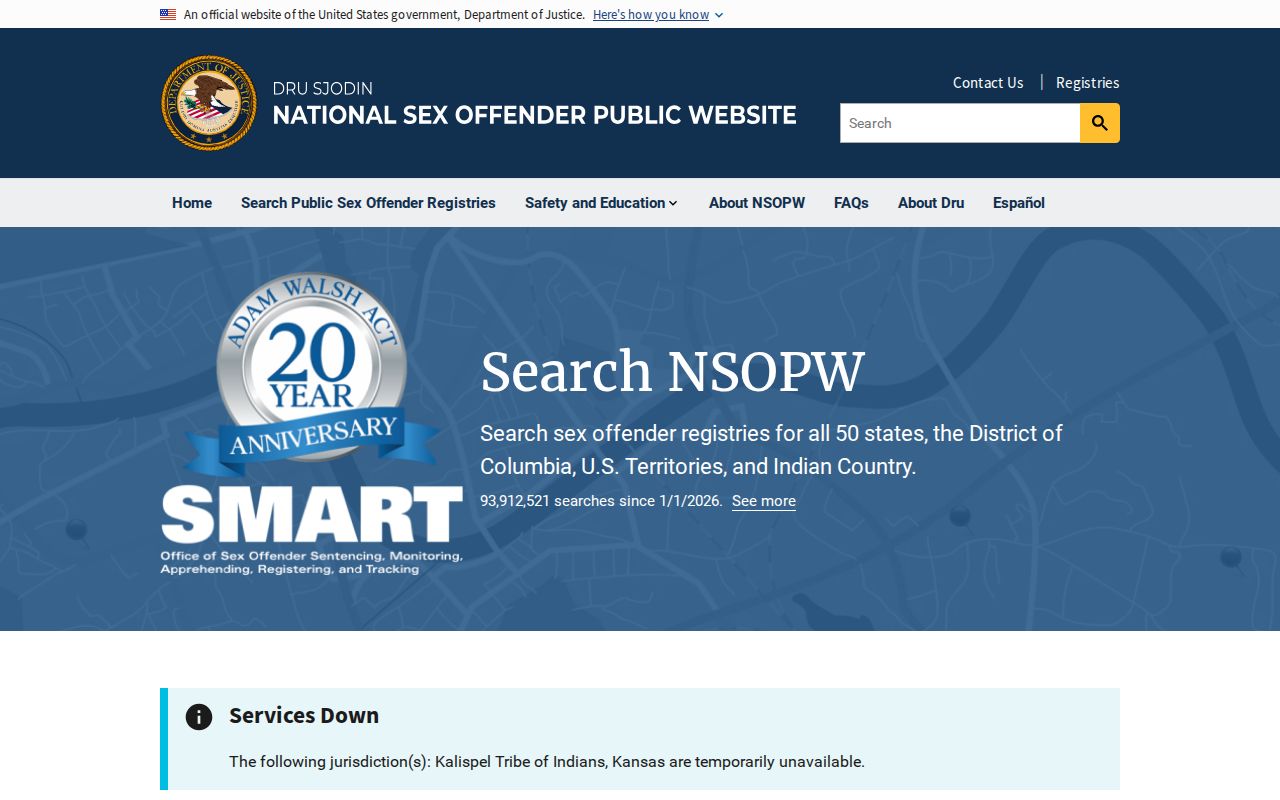
Use the national result to locate the responsible registry, then verify the current profile there.
Registration Levels and Duties in Texas
Texas risk levels and registration duration are separate concepts. Level 1 means low danger and not likely to continue sexual offending. Level 2 means moderate danger and may continue. Level 3 means serious danger and will continue. Civil Commitment is a separate court-based designation for a sexually violent predator. None of these labels, by itself, supplies the term of registration.
The Texas DPS registration program summary explains the state and local roles behind Irion County records. The program image below helps distinguish the official guidance layer from the separate public search screen.
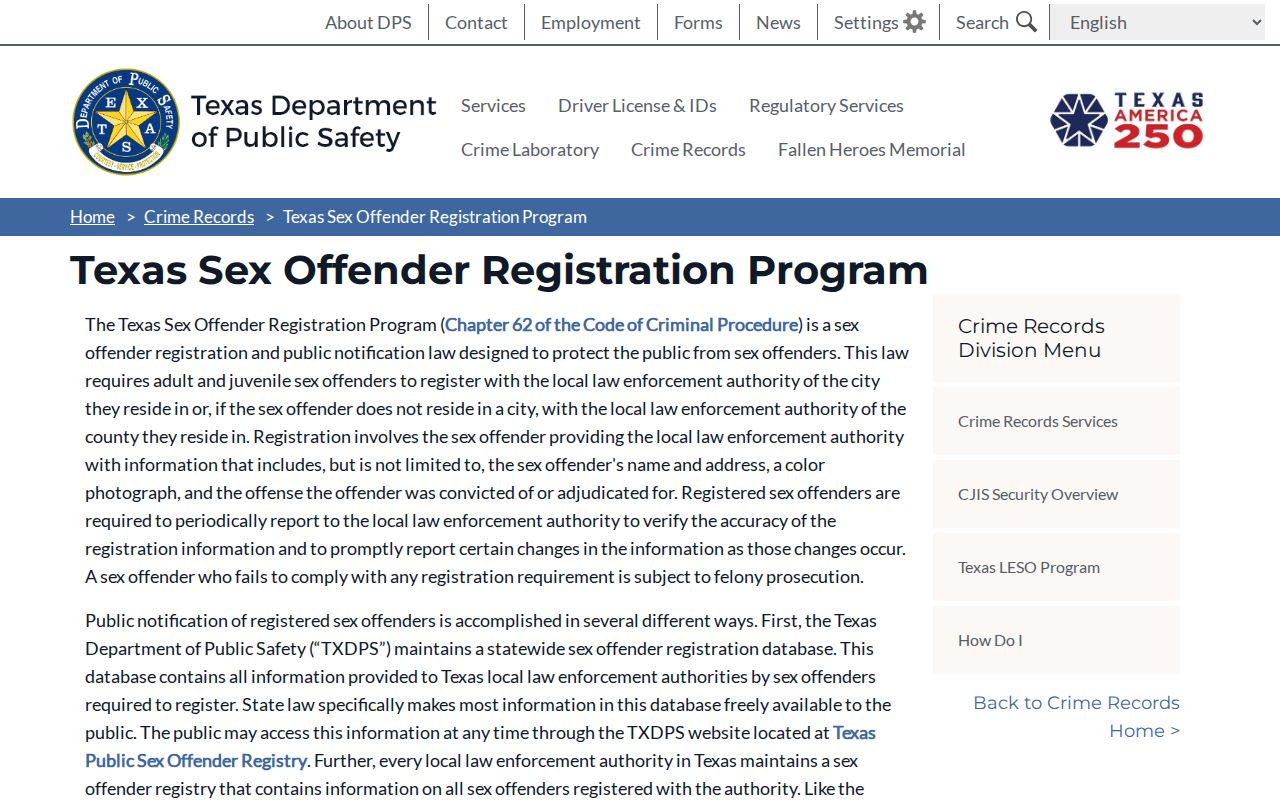
That guidance is essential because the offense, judgment, release facts, and Chapter 62 category control the duty, not a simple federal tier label.
| Texas Category | General Duration | Public Treatment |
|---|---|---|
| Listed lifetime offense or category | Lifetime | Public as Chapter 62 allows, subject to lawful modification or removal. |
| Other adult reportable case | Generally ten years from the later discharge, release, or dismissal trigger | Public fields remain subject to statutory exclusions. |
| Juvenile adjudication | Generally ten years from the statutory disposition or completion trigger | A court may defer, exempt, or make registration nonpublic. |
| Extrajurisdictional duty | Tracks the foreign, federal, or UCMJ duty as Chapter 62 provides | Texas treatment depends on the governing duty and state law. |
Irion County Verification Timelines
Most registrants verify annually within the permitted window around their birthday. A person with the statutory combination of two or more sexually violent convictions or deferred adjudications verifies every 90 days. Civil commitment requires verification every 30 days. These schedules concern contact with the registering authority, not how often a member of the public should search.
Chapter 62 also has rules for travel and changes. A person who visits another place at least three times in a month and stays more than 48 consecutive hours can trigger frequent-visitor reporting. Planned moves and later arrival must be reported on the statutory schedule. Since each profile depends on agency submissions, a new fact may not appear at the moment it occurs.
Note: Contact the reporting authority when a public status conflicts with reliable current facts; do not treat the mismatch as proof of an offense.
High-Risk Irion County Notices
DPS may send community postcards when a high-risk registrant or civilly committed sexually violent predator moves into a community. In an unsubdivided area, the notice reaches non-P.O.-box addresses within one mile. In a subdivided area, the range is three blocks. Texas sends these notices in English and Spanish. That rule is more specific than a general claim that every move creates a mailed alert.
Texas Code of Criminal Procedure Chapter 62 is the source for the registration, public-field, verification, and notification framework. The official law page appears below so readers can identify the current controlling text.
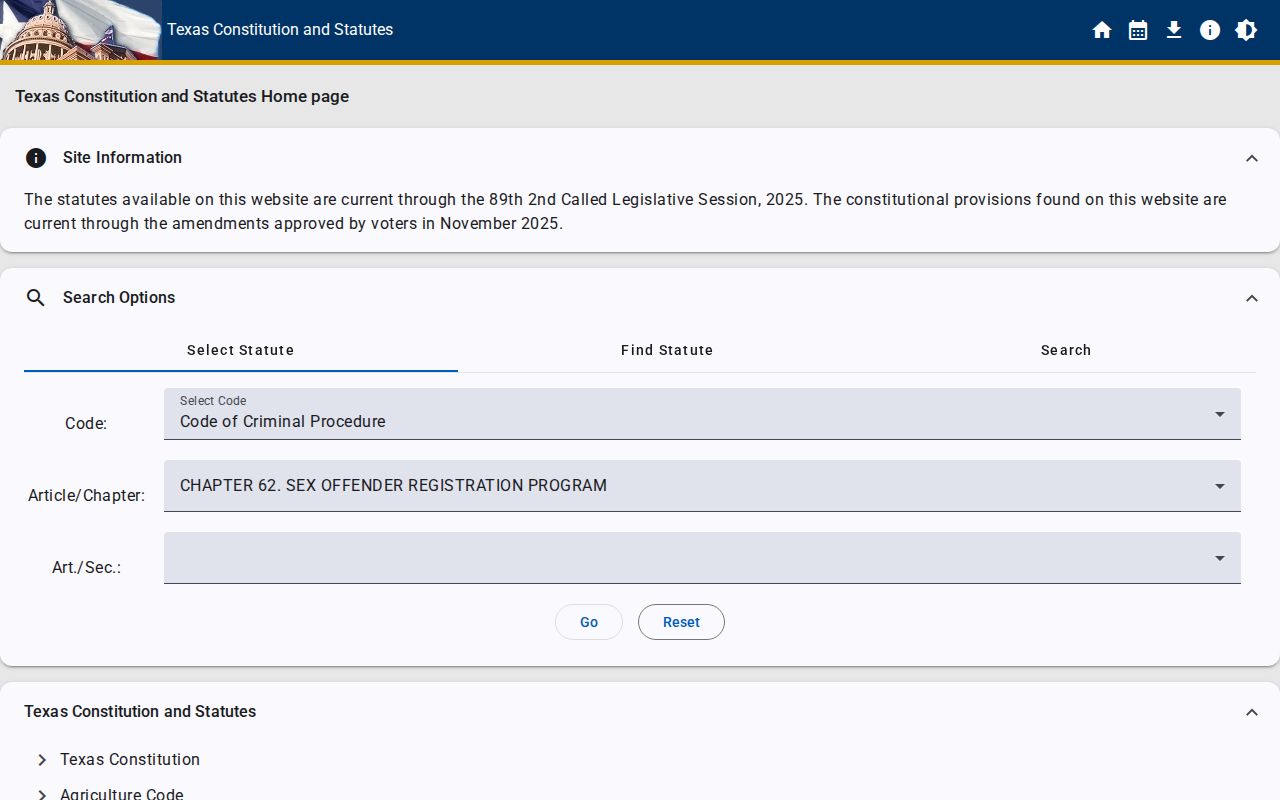
The statute also shows why a universal Irion County child-safety-zone distance should not be assumed. Chapter 62 does not create one statewide residence ban, though supervision terms or a qualifying local ordinance may impose separate limits.
Using Registry Information Lawfully
Registry data supports personal safety, family planning, and community awareness. Read the whole profile, confirm it with the office shown, and share only accurate public facts for a lawful reason. A registry entry is not permission to follow someone, contact a household, post threats, or organize retaliation. Sensitive facts withheld by law must not be sought through deception.
For suspected noncompliance, contact the Irion County Sheriff, the registering local authority shown on the profile, or Texas DPS. Give the public name, listed address, record link, and the specific mismatch observed. Let the agency assess whether a reporting deadline, exception, court order, or update lag applies.
Registry misuse warning: The public notice required by Texas Code of Criminal Procedure article 62.005 warns that registry information may not be used to injure, harass, or commit a crime against a registrant, and misuse may lead to criminal prosecution or civil liability.